.png&w=640&q=75)
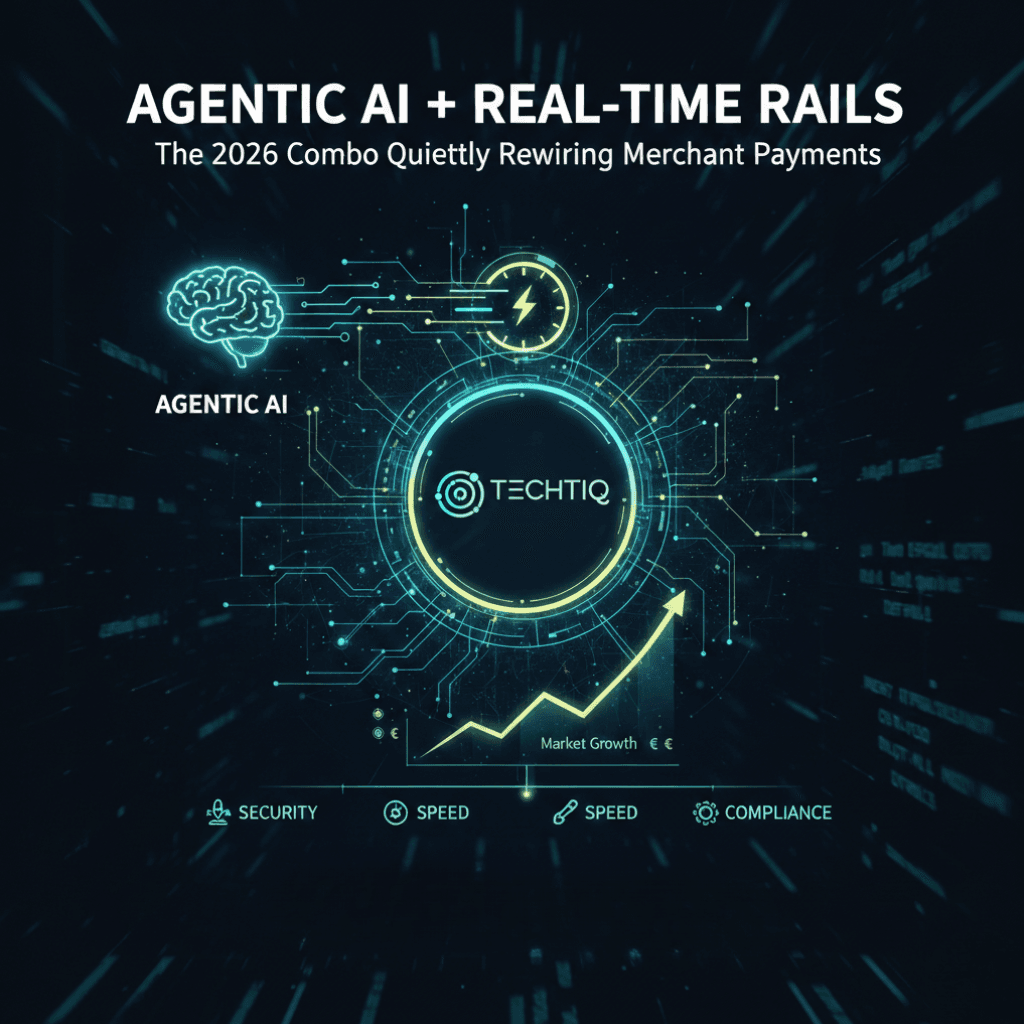
Agentic AI + Real-Time Rails
Author
February 16, 2026
The 2026 Combination Quietly Rewiring Merchant Payments
If 2025 was the year the market debated AI agents shopping on behalf of users, 2026 is the year those agents begin executing payments, at scale, in real time, and with minimal human intervention.
The shift is no longer theoretical. Visa has recently formalized its Trusted Agent Protocol (TAP) within the Intelligent Commerce framework, moving from pilot to live environment. Simultaneously, Mastercard launched its Agent Suite in late January, providing the “trust layer” for banks to deploy agents that handle end-to-end transactions.
Meanwhile, real-time payments (RTP) have hit a critical inflection point. Global RTP market value is projected to hit $47.06B this year, maintaining a 34.3% CAGR as initiatives like Project Nexus (connecting domestic instant rails globally) move toward their 2026 go-live dates.
The result is a new merchant reality: Autonomous agents initiate; instant rails execute.
What This Means for Modern Payment Stacks
1. Autonomous Flows Require Intelligent Orchestration
AI agents do not tolerate latency or “dumb” routing. Platforms now need dynamic, AI-driven selection across multiple PSPs and rails to pick the fastest, cheapest path in milliseconds.
The TechTiq Edge: Static routing is a legacy bottleneck. Our engine evaluates performance and risk signals in <500ms to ensure the agent’s “intent to buy” isn’t lost to a 404 error.
2. Real-Time + Agentic = Resilience as a Baseline
With volumes surging (P2P and P2B segments leading the charge), 99.9%+ uptime is no longer a goal—it is the baseline. When an agent decides to purchase for 5,000 users simultaneously, your infrastructure must handle the “elasticity” of that spike without a hiccup.
3. Trust Becomes the New Infrastructure
In Europe, the PSD3/PSR framework is nearing formal adoption (expected Q2 2026), mandating Strong Customer Authentication (SCA) at the moment of agent enrollment. AI isn’t just spotting fraud; it’s orchestrating compliance via:
- Network Tokenization to secure agent credentials.
- Verification of Payee (VoP) to eliminate “misdirected” AI payments.
- Behavioral Biometrics to distinguish legitimate agents from malicious bots.

Market Signals from the Week (Feb 9–16, 2026)
- PayPay’s Nasdaq Filing: Japan’s QR leader filed for a $19.6B IPO on Feb 13. Crucially, they announced a new venture with Visa to bridge QR and contactless rails in the U.S.
- Klarna x Google UCP: Klarna officially backed the Universal Commerce Protocol on Feb 2, positioning itself as the primary BNPL provider for the Gemini-led shopping ecosystem.
- The “AP2” Standard: Adoption of the Agent Payments Protocol (AP2) is accelerating among Shopify and Stripe merchants, creating a “common language” for agents to talk to checkout pages.
The Architecture Shift: From Processing to Decisioning
The emerging model replaces the traditional “shopping cart” with a streamlined decision loop:
- AI Agent Layer: Interprets user intent and discovers products via UCP.
- Orchestration Engine: TechTiq evaluates rail performance, cost, and risk.
- Real-Time Rails: FedNow or SEPA Instant execute the transfer.
- Parallel Compliance: AML/KYC checks happen in-flight without stopping the flow.
Bottom Line
2026 isn’t about adding another “Pay” button; it’s about building infrastructure that lets agents and instant rails work together without friction. Those who bridge this gap now will capture the performance moat while others are still debugging legacy gaps.